
Tech Neck: Phone and Computer Posture Tips for Neck Pain
Tech Neck: How Your Phone and Desk Posture May Be Contributing to Neck, Jaw, and Head Pain
Do you find yourself rubbing your neck, stretching your shoulders, or experiencing headaches after spending hours looking at your phone or working at your computer?
You aren't alone. Many people spend a large portion of their day looking down at a phone, leaning toward a computer, or sitting in a position that gradually encourages the head to move forward and the shoulders to round.
During my recent interview with KPRC Channel 2, I discussed how everyday device and workspace habits can influence spinal alignment, muscle activity, and symptoms involving the neck, jaw, and head.
The good news? You don't necessarily need an expensive ergonomic setup or a completely different workout routine. Sometimes, small changes in how you position your head and workspace can make a meaningful difference.
What Is Tech Neck?
Tech neck is a common term used to describe neck discomfort associated with prolonged device use and sustained head-forward positions.

When your head moves forward in front of your shoulders, the muscles surrounding your neck and upper back are in shortened position. Spending extended periods in that posture may contribute to muscle fatigue, tension, and discomfort.
This doesn't mean that looking down at your phone is automatically damaging your spine. Your body is designed to move through different positions. The bigger concerns are your posture causing compression in your spine and spending hours in the same position without enough movement or variation.
1. Stop Letting Your Head Drift Forward When Looking at Your Phone
Think about how you typically use your phone.
You might start by looking down at the screen with your head relatively aligned over your shoulders. As you become distracted by what you're reading, your head gradually moves forward, your shoulders round, and your upper back begins to slump.
One adjustment I discussed during my KPRC interview is the chin tuck.
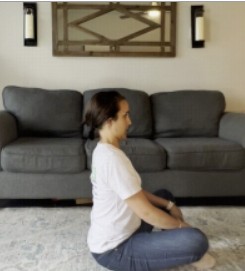
A chin tuck involves gently drawing your head backward, as though you're making a small double chin. Your goal is to bring your head back into better alignment with your spine rather than allowing it to jut forward.
This movement also helps you become aware of the muscles in the front of your neck that contribute to controlling head position.
Try this:
Sit or stand comfortably.
Look straight ahead.
Gently pull your chin backward without moving your head up or down.
Keep the movement small and controlled.
Relax and repeat.
The goal is to develop awareness and control so you can change positions when needed.
2. Adjust Your Computer Screen
Your workspace can also influence how you position your neck throughout the day.
If your monitor is too low, you may repeatedly bend your neck to look down. If it's too far away, you may lean your head and upper body forward to see the screen.
A useful starting point is to position the top of your computer screen around eye level, with the screen at a comfortable distance that allows you to look slightly downward.
Consider these adjustments:
Raise your monitor or laptop screen to have the top of the screen even with eye level
Use an external keyboard and mouse for the best shoulder posture
Scoot close enough to your workstation so your elbows can rest at 90 degrees by your side and you can be using your keyboard
Place the screen an arm's length away from you when leaning back in your chair 20 degrees.
Remember, the best workspace is one that allows you to work comfortably and move regularly.
3. Strengthen the Muscles That Help Support Your Neck
Posture isn't just about reminding yourself to sit up straight.
Your body needs the strength and endurance to control your head and neck throughout the day.
The muscles in the front of your neck help control head position. If you have difficulty maintaining a comfortable head position, exercises that improve neck muscle coordination and endurance may be helpful.
Chin tucks are one way to begin practicing this control.
However, strengthening should be based on your individual needs. Not everyone with neck pain needs the same exercises, and more exercise isn't always better.
A physical therapist can help determine which muscles need strengthening, which areas may benefit from mobility work, and how to progress exercises appropriately.
4. Don't Focus Only on Getting Out of Pain
One of the most important things I shared during my KPRC interview is that physical therapy should be about more than temporarily reducing pain.
At Elevated PT, we want to help you understand why certain activities may be contributing to your symptoms and what you can change to improve your everyday movement.
That includes:
Identifying habits that may be contributing to discomfort.
Improving neck and upper-body strength and endurance.
Addressing mobility limitations when appropriate.
Learning how to adjust your environment.
Developing strategies to manage symptoms during your normal activities.
The goal is to help you become more confident and independent in managing your body.
When Should You Seek Physical Therapy?
If neck, jaw, or head discomfort is interfering with your ability to work, exercise, sleep, or enjoy everyday activities for more than 2 weeks, it may be worth having a physical therapist evaluate your movement and symptoms.
Neck pain and headaches can have several different causes, so it's important not to assume that posture is responsible for every symptom.
A physical therapist can help determine whether movement habits, muscle strength, mobility, or other factors may be contributing and develop an individualized plan.
Take Control of Your Everyday Habits
You don't have to maintain perfect posture every minute of the day. Your body benefits from movement, variety, and the ability to comfortably change positions.
Start by noticing what happens when you look at your phone or work at your computer. Does your head drift forward? Does your neck become tired? Are you sitting in the same position for hours?
Small changes in awareness, workspace setup, and exercise can be a great starting point.
Want help figuring out what may be contributing to your neck pain?
Elevated PT provides personalized, convenient, and consistent physical therapy services in your home/office/gym/sporting facility designed around your needs.
Learn more about how we can help at Elevated PT and take the next step toward moving with greater confidence (www.elevatedptwellness.com)
Educational note: This article is for general educational purposes and is not a substitute for an individualized medical evaluation.
