The Truth About Pickleball Injuries
The Truth About Pickleball Injuries: What Every Player Should Know to Stay Active
Pickleball is fun, social, and a great way to stay active. But just because it's played on a smaller court doesn't mean it's easy on your body!
Pickleball has quickly become a favorite activity for adults of all ages. It's an enjoyable way to get exercise, spend time with friends, and maintain an active lifestyle. However, as participation grows, so does the opportunity for injuries.
If you've ever finished a pickleball match with an aching knee, sore shoulder, tight calf, or painful back, you're not alone.
The good news? Experiencing pain doesn't automatically mean you need to give up the sport you love. Understanding why injuries happen and how your body responds to physical demands can help you make better decisions about your health and activity.
At Elevated PT, we believe that education is one of the most important tools in injury prevention and recovery. Let's look at what makes pickleball physically demanding and what you can do to better prepare your body.
Why Is Pickleball More Physically Demanding Than You Might Think?
Pickleball may look relatively simple, but playing requires a combination of strength, mobility, balance, coordination, and endurance.
During a typical game, your body needs to perform several movements repeatedly:
Quick changes in direction: Moving laterally to reach the ball requires coordination and strength through your hips, knees, and ankles.
Sudden stops and starts: Accelerating toward the ball and quickly stopping requires your muscles to absorb and control forces.
Lunging and reaching: Reaching for low shots places additional demands on your legs, hips, and trunk.
Rotational movements: Hitting the ball requires coordination between your trunk, shoulders, and arms.
Repetitive gripping and swinging: Repeated paddle movements can place stress on the wrist, elbow, and shoulder.
These movements aren't necessarily dangerous. However, they require your body to have the strength and physical capacity to tolerate them.
Problems can develop when the demands of the sport exceed what your body is currently prepared to handle.
Common Pickleball Injuries and Areas of Discomfort
Although injuries can happen anywhere in the body, several areas are commonly challenged by the movements involved in pickleball.
1. Knee Pain
Pickleball involves frequent bending, lunging, pivoting, and changing directions.
These movements require your quadriceps, glutes, and other supporting muscles to control your body weight while moving.
If your muscles aren't adequately prepared for these demands, you may experience discomfort around the kneecap, inside the knee, or throughout the surrounding muscles and tendons.
Having knee arthritis or a previous knee injury doesn't automatically mean you cannot play pickleball. It does mean that understanding your current strength, mobility, and activity tolerance is important.
2. Achilles and Calf Pain
Your calves and Achilles tendons play an important role in pushing your body forward, accelerating, and changing directions.
Every time you push off your foot to move toward the ball, these structures help generate and absorb force.
Sudden increases in playing frequency, intensity, or duration can exceed your current tissue capacity.
Calf strains and Achilles tendon irritation are examples of problems that can interfere with your ability to move comfortably around the court.
3. Shoulder and Elbow Pain
Although pickleball doesn't involve the same overhead serving mechanics as tennis, players still use their shoulders, elbows, and wrists repeatedly.
Reaching, swinging, gripping the paddle, and hitting harder shots all require coordinated upper-body movement.
If your shoulder mobility, strength, or movement control is limited, you may compensate by placing additional stress on other areas.
Why Does Pain Develop During Physical Activity?
One of the biggest misconceptions about injuries is that pain always means something has been damaged.
Pain is more complicated than that.
Pain is your body's protective response, influenced by many factors, including tissue sensitivity, physical stress, recovery, previous injuries, and your nervous system.
Sometimes pain develops after a sudden injury. Other times, it gradually increases as you repeatedly expose your body to physical demands that exceed its current capacity.
For example, imagine someone who hasn't played pickleball in several months.
They return to the court and immediately play three matches.
Even if they feel physically fit, their calves, knees, and hips may not be prepared for the repeated acceleration, deceleration, and lunging required by the sport.
The problem isn't necessarily that pickleball is bad for their body. It may simply be that their body needs more time and preparation to tolerate the activity.
The goal isn't to avoid movement. The goal is to improve your body's ability to tolerate movement.
How Can You Better Prepare Your Body for Pickleball?
Instead of relying exclusively on playing pickleball to improve your fitness, consider incorporating exercises that prepare your body for the specific movements required by the sport.
Here are several areas worth addressing:
1. Lower-body strength
Build strength through your quadriceps, hamstrings, glutes, adductors, and calves.
2. Balance and single-leg control
Pickleball frequently requires you to shift your weight from one leg to another.
Single-leg balance exercises can help improve your ability to stabilize your body during these movements.
3. Trunk strength and rotational control
Your core helps coordinate movement between your upper and lower body.
Exercises that challenge your ability to stabilize your trunk while moving your arms and legs can help prepare you for reaching, bending, and rotating.
4. Mobility
Having adequate mobility in your ankles, hips, and upper back can help you access the positions needed to move efficiently.
Mobility and strength should work together. Being able to move into a position is only part of the equation; you also need the strength to control that position.
5. Gradual increases in activity
Avoid making sudden increases in how frequently or intensely you play.
If you're returning after time away, start with shorter sessions and allow your body time to adapt.
Do You Have to Stop Playing Pickleball If You Have Pain?
Not necessarily!
Pain doesn't always mean you need to stop every activity. In some situations, modifying your playing time, intensity, or movements may allow you to remain active while addressing the underlying problem.
However, new injuries that hurt longer than two weeks, significant swelling affecting your joint range of motion, inability to bear weight, sudden weakness, or severe sharp pain deserve appropriate medical evaluation.
If discomfort continues to interfere with your ability to play longer than two weeks, it's worth having your movement, strength, and physical capacity evaluated by a physical therapist.
Rather than simply treating the painful area, physical therapy can help identify the factors contributing to your symptoms and develop a plan to improve your ability to participate in the activities you enjoy.
The Elevated PT Perspective: Don't Just Treat Pain. Understand Your Body!
At Elevated PT, we believe physical therapy should be about more than temporarily reducing symptoms.
Our goal is to help you understand your body so you can make informed decisions about your movement, exercise, and overall health.
You shouldn't have to guess which exercises to perform or automatically give up an activity because something hurts.
Whether you're a recreational pickleball player, runner, weight lifter, or someone who simply wants to remain active, improving your strength, mobility, and movement control can help you maintain the activities that make life enjoyable.
Want to learn more?
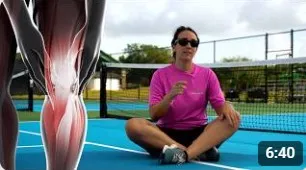
Watch Dr. Christina's video: The Truth About Pickleball Injuries – What Your Doctor Isn't Telling You
If pickleball-related pain is keeping you from enjoying the court, Elevated PT can help you better understand what's happening and develop an individualized plan to get you moving confidently again.
Elevated PT – We bring the clinic to you!
Education. Empathy. Empowerment.
