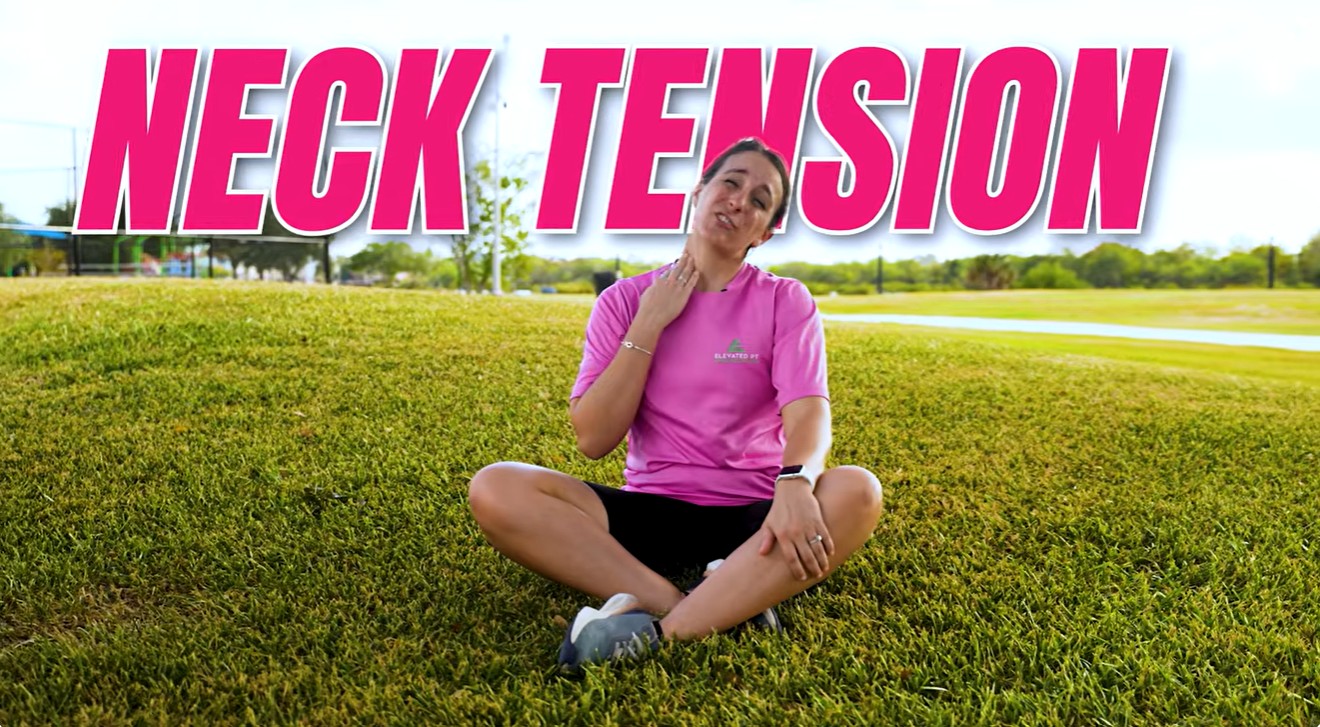
Can Neck Tension Cause Jaw Pain? A Physical Therapist Explains
Can Neck Tension Cause Jaw Pain? A Physical Therapist Explains
Does your jaw click, pop, ache, or feel tight? The problem might not be coming from your jaw alone.
When people experience jaw discomfort, they usually focus on the jaw joint itself. But as an orthopedic physical therapist, I often encourage people to look at the surrounding areas, especially their neck.
I'm Dr. Christina, The Picky PT, and today we're talking about how tight neck muscles and changes in head posture may contribute to jaw discomfort.
Your Neck and Jaw Work Together
Your jaw joint, also called the temporomandibular joint (TMJ), is located just in front of your ear. It allows you to talk, chew, yawn, and open your mouth.
Although your jaw and neck have different jobs, their muscles and movement patterns are closely connected.
When your neck muscles become tense or your head spends a lot of time in a poor posture, it can influence how you hold and move your jaw.
This doesn't mean every case of jaw pain comes from the neck. But it does mean your neck deserves some attention if you're experiencing ongoing jaw symptoms.
Meet Your Scalene Muscles
Your scalenes are a group of muscles along the sides of your neck. There are three on each side:
Anterior scalene
Middle scalene
Posterior scalene
These muscles help move and stabilize your neck and assist with breathing.
When they become tight or sensitive, you may experience discomfort along the side of your neck. Sometimes that discomfort can occur alongside pain around the jaw and ear.
The scalenes don't attach directly to your jaw joint, but inflammation and tension in the body can spread like wildfire affecting nearby areas.
How to stretch the side of your neck
In my YouTube video, I demonstrate a gentle way to stretch the muscles along the side of your neck.
Step 1: Sit upright and gently stabilize the collarbone on the side you're stretching.
Step 2: Slowly tilt your head away from that side.
Step 3: From this position, experiment with a small, comfortable head rotation in either direction (looking back to the side your came from or looking away from the side you came from).
Step 4: Notice whether one direction produces a gentle stretching sensation along the side of your neck.
If the position feels comfortable, you can try holding a gentle stretch for approximately 30-90 seconds. Avoid forcing the movement or stretching into pain.
You should not experience dizziness, tingling, numbness, or sharp pain. Stop if any of these occur.
How Head Posture Can Affect Your Jaw
Now here's another piece of the puzzle: your posture.
Think about how much time you spend looking at your phone, working on a computer, or sitting with your head hanging forward.
Your head position influences the way your neck muscles work and can change how your jaw moves.
For example, if you're constantly holding your head forward or tilted to one side, certain muscles may need to work harder to support that position while other muscles remain in a shortened tight position.
Over time, this can contribute to muscle fatigue, stiffness, and discomfort.
That's why addressing jaw pain sometimes involves looking beyond the jaw itself.
When Should You Get Your Jaw Checked?
If you're experiencing jaw clicking, popping, aching, or difficulty opening your mouth, it's worth having a healthcare professional evaluate what's going on.
Painless clicking alone isn't always a problem. But painful clicking, locking, or persistent difficulty chewing or opening your mouth deserves attention.
A physical therapist experienced in jaw and neck conditions can evaluate your jaw movement, neck mobility, muscle sensitivity, and movement habits to help identify what may be contributing to your symptoms.
Your Elevated Takeaway
Don't assume the location of your pain tells you the entire story.
If your jaw is bothering you, your neck may be one piece of the puzzle.
Watch my video to see how I demonstrate the neck mobility check and explain the connection.
Watch: Can Neck Tension Cause Jaw Pain?
At Elevated PT, we provide mobile, one-on-one physical therapy that looks at how your whole body moves, not just the area that hurts.
If jaw or neck discomfort is interfering with your everyday activities, we're here to help you understand what might be contributing to it.
